Quick Answer
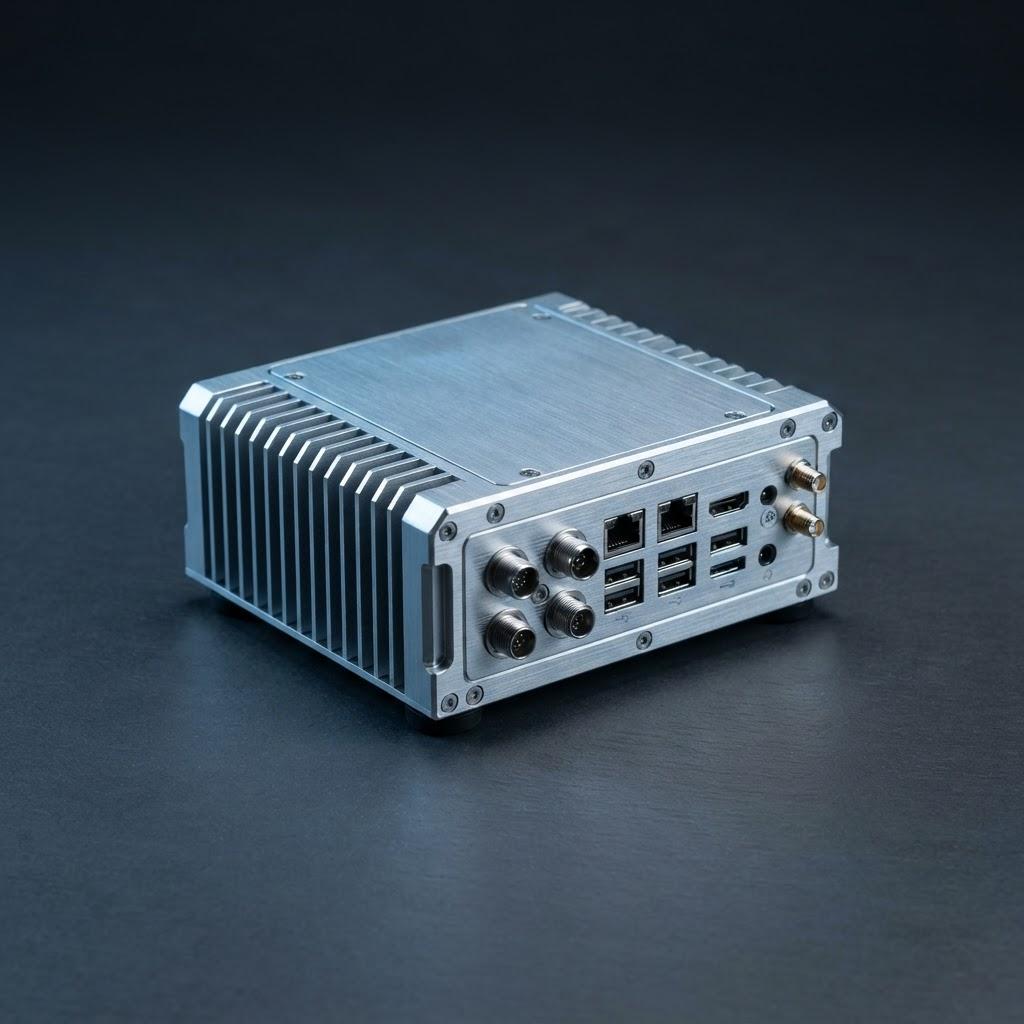
Computer vision models handle edge deployment in 2026 by pairing compact architectures with hardware-aware optimization, then validating runtime behavior on the target device rather than trusting cloud benchmarks. Reliable systems balance accuracy against latency, memory pressure, power draw, thermal limits, and maintainability across the device fleet.
Introduction
Modern computer vision can run effectively at the edge, but only when the model, runtime, camera pipeline, and hardware are engineered as one system. Larger backbones may improve offline accuracy while producing unstable response times once heat, bandwidth contention, and embedded memory limits appear. Production teams now use quantization, structured pruning, distillation, and architecture selection to make vision AI operationally predictable. The difficult tradeoff is not choosing the smallest model, but preserving failure-critical detection quality under real operating conditions.
Key Takeaways:
Edge-ready models are selected against device constraints, not benchmark accuracy alone.
Quantization and pruning require validation on rare, safety-critical visual cases.
Deployment quality depends on telemetry, secure updates, and repeatable device-level tests.
Why Edge Constraints Redefine Model Selection
Edge inference moves decisions close to cameras and sensors, reducing dependence on continuous network access but shifting responsibility to constrained local hardware. Embedded monitoring platforms face limited energy, storage, and computing capacity, while growing data volume creates processing obstacles for conventional architectures. This is why embedded computing capacity must be treated as a design input rather than a late deployment concern.
Start With the End-to-End Inference Budget
Measure the full pipeline from image capture to the downstream action, not just neural-network execution time. A detector can be fast while frame conversion, resizing, decoding, tracking, post-processing, and message delivery create unacceptable delay.
Sensor path: Test exposure changes, dropped frames, compression artifacts, and camera-driver behavior.
Memory path: Track allocation churn, tensor copies, and competing processes that reduce available headroom.
Thermal path: Run sustained workloads until clock behavior stabilizes under the installed enclosure.
Decision path: Include confidence filtering, tracking, alert routing, and actuator handoff in latency tests.
Choose Architectures That Match the Hardware
Optimized YOLO variants remain practical when detection speed and straightforward post-processing matter, while distilled vision transformers can justify their overhead when scene context or long-range relationships materially affect accuracy. Hybrid CNN-transformer models can offer a middle path, but they should be assessed against memory movement and operator support in the selected runtime. Teams evaluating architecture inference efficiency should evaluate the complete compiled graph on the actual accelerator, not the architecture label.
Architecture family | Useful edge characteristic | Primary deployment risk | Validation priority |
|---|---|---|---|
Optimized YOLO | Direct detection workflow | Post-processing can become a bottleneck | End-to-end response consistency |
Distilled vision transformer | Context-rich feature representation | Memory and unsupported operators | Compiled graph compatibility |
Hybrid CNN-transformer | Mixed local and global features | Complex tuning across runtimes | Accuracy retention after conversion |
The right choice is the model that holds its error profile and response behavior under sustained device load, not the one with the most attractive laboratory result.
How Production Teams Optimize Edge Models
Model compression works when it follows task analysis and deployment measurement, not when it is applied as a generic size-reduction exercise. Effective vision deployment guide workflows establish a baseline model, convert one component at a time, and retain test samples that expose missed objects, poor lighting, occlusion, and motion blur.
Use Quantization, Pruning, and Distillation Deliberately
Quantization lowers precision to reduce model footprint and improve hardware efficiency, but it can change confidence calibration and disproportionately damage small-object or low-contrast classes. Use representative calibration data from the target cameras, including difficult scenes, and compare class-level false negatives after conversion rather than relying on aggregate accuracy.
Structured pruning removes channels or blocks that hardware can execute efficiently, unlike unstructured sparsity that may save parameters without delivering runtime gains. Distillation transfers behavior from a larger teacher to a smaller student, making it especially useful when the edge model must preserve nuanced labels or boundary decisions. Mature production AI engineering keeps a held-out field dataset separate from training data so adaptation does not hide a regression.
Benchmark the Runtime, Not the Export File
Real-time computer vision performance testing should include cold starts, long-running sessions, concurrent input streams, camera disconnects, and degraded connectivity. Record inference timing distributions, queue depth, dropped frames, accelerator utilization, memory usage, device temperature, output stability, and recovery behavior after a service restart.
Evaluation should also map technical results to operational risk: an occasional slow inference may be tolerable for inventory inspection but unacceptable for collision avoidance. AI standards activities reinforce the value of consensus-based methods for assessing trustworthy system behavior rather than treating a single accuracy score as sufficient evidence.
Design for Fleet Reliability and Security
Most edge rollouts fail at the seams between model and operations: incompatible runtime versions, unsigned updates, stale calibration data, sensor drift, or missing rollback paths. Use versioned artifacts for models and preprocessing, record device configuration with every prediction trace, and rehearse recovery procedures before broad release. Reviewing known computer vision failures helps teams convert predictable field faults into pre-release test cases.
Conclusion
Edge deployment succeeds when computer vision engineering treats the device as part of the model specification. Select an architecture that the target runtime can execute predictably, compress it with field-representative validation data, and test full-pipeline behavior under sustained load. Build telemetry, rollback, and lifecycle security into the release process rather than adding them after deployment. NinjaStudio.ai provides production-focused analysis that can help teams separate deployable techniques from benchmark-driven assumptions.
For practical implementation analysis, explore NinjaStudio.ai for technical guidance on dependable AI systems.
Frequently Asked Questions (FAQs)
How to optimize computer vision models for edge devices?
Optimizing computer vision models for edge devices requires selecting supported operators, applying measured quantization or structured pruning, and validating each conversion against representative field images because memory, thermal behavior, and runtime compatibility can change the deployed model's practical accuracy.
What are the challenges of deploying computer vision at scale?
The challenges of deploying computer vision at scale include inconsistent hardware configurations, camera variation, model-version drift, unreliable connectivity, thermal constraints, and secure fleet updates, all of which require observability and controlled release procedures beyond initial model development.
Is computer vision ready for production scale?
Computer vision is ready for production scale when teams define measurable error tolerances, test on the deployed hardware and camera conditions, instrument the runtime, and maintain rollback capability, because model quality alone cannot establish operational reliability.
How does computer vision work in real-world systems?
Computer vision works in real-world systems by converting sensor frames into model inputs, executing inference, applying task-specific post-processing, and routing a decision to a person or machine, with each stage requiring monitoring for latency, data quality, and failure recovery.
What is the difference between vision AI and standard image processing?
Vision AI uses trained models to infer objects, conditions, or relationships from data, while standard image processing applies predefined operations such as filtering, thresholding, or geometric transforms, making the former more adaptable but more dependent on training data and runtime controls.
Can computer vision improve manufacturing efficiency?
Computer vision can improve manufacturing efficiency when it detects defects, verifies assembly steps, tracks material flow, or flags unsafe conditions at the point of work, provided the alert logic is integrated with clear human review or automated response workflows.
About the Author
Daniel Foster is an Automation & AI Systems Content Advisor focused on intelligent automation, workflow optimization, and AI-powered business systems. His technical analysis emphasizes deployment decisions that can be measured, maintained, and trusted in production environments.