
Introduction
Retrieval Augmented Generation has become the default architecture for grounding LLM outputs in enterprise knowledge, yet RAG hallucinations in production remain the most common reason teams lose trust in their own systems. The problem is not that models fail to retrieve context. The problem is that nothing between retrieval and response generation verifies whether the context is actually sufficient, relevant, or faithfully represented in the final output. Confidence scoring addresses this gap directly by inserting a quantitative validation layer that intercepts unreliable answers before they reach users. The difference between a RAG system that occasionally embarrasses your team and one that operates at production-grade reliability often comes down to a single architectural decision: whether you score confidence or simply hope for the best.

Why RAG Systems Hallucinate and Where Confidence Scoring Fits
Understanding why hallucinations occur is a prerequisite for building effective detection. Hallucinations in RAG pipelines do not originate from a single failure point. They emerge from a chain of compounding weaknesses that span retrieval, context assembly, and generation. A production-focused analysis of RAG failure modes reveals that most incidents trace back to one of a handful of root causes.
Root Causes of Hallucination in RAG Pipelines
Each stage of a RAG pipeline introduces its own risk of producing unfaithful outputs. When retrieval quality degrades, the generator is forced to fill gaps with parametric knowledge, which is where confabulation begins. Recognizing these failure points is the first step toward designing effective guardrails for language model outputs.
Low retrieval precision: The vector search returns chunks that are topically adjacent but factually irrelevant, giving the model plausible-looking but wrong context to synthesize.
Context window pollution: Too many retrieved chunks dilute the signal, causing the model to blend information from contradictory or outdated sources into a single response.
Faithfulness drift: The generator rephrases retrieved facts in ways that subtly alter their meaning, introducing errors that are nearly impossible to catch through surface-level review.
Missing evidence: The knowledge base simply does not contain an answer, but the model generates one anyway because it has no mechanism to express uncertainty.
The Role of Confidence Scoring as a Pre-Serve Gate
Confidence scoring sits between generation and delivery. It acts as a programmatic gate that evaluates whether a response meets a defined reliability threshold before it ships to the end user. This is fundamentally different from post-hoc evaluation or periodic audits. A recent survey on hallucination detection methods confirms that inline scoring, applied at inference time, catches a significantly higher percentage of hallucinated outputs compared to batch evaluation approaches. The key architectural insight is that confidence scoring does not fix hallucinations. It prevents hallucinated outputs from reaching users while you fix the upstream causes.
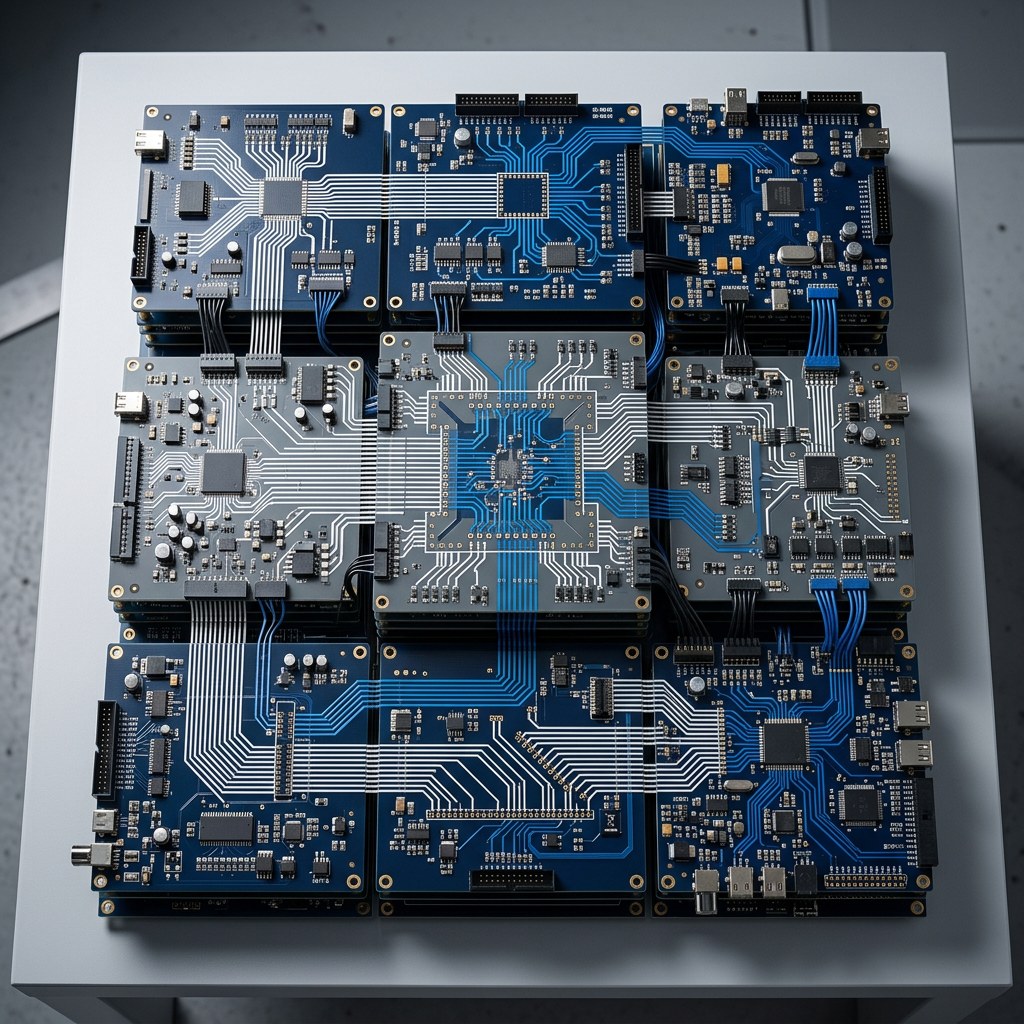
Designing a Confidence Scoring Layer for Production RAG
Moving from concept to implementation requires decomposing "confidence" into measurable signals. A single monolithic score is fragile. Production-grade systems typically combine multiple scoring dimensions, each targeting a different failure mode. The goal is to build a composite signal robust enough to make hallucination mitigation a systematic process rather than a guessing game.
Three Scoring Dimensions That Actually Work
The most effective confidence scoring implementations evaluate three independent dimensions and combine them into a weighted composite. Each dimension addresses a distinct failure class, and together they cover the majority of hallucination scenarios engineers encounter in production.
The first dimension is retrieval relevance scoring. Before the generator even touches a retrieved chunk, you should compute a relevance score between the user query and each returned document. Cosine similarity from your embedding model provides a baseline, but cross-encoder rerankers produce more reliable relevance estimates. Set a minimum relevance threshold (empirically tuned per use case) and discard chunks that fall below it. This single step eliminates a surprising volume of downstream hallucination by ensuring the model only sees genuinely relevant context. Teams focused on practical hallucination fixes often find that retrieval quality improvements alone reduce error rates by 30-50%.
The second dimension is semantic validation of RAG pipelines through faithfulness checking. After generation, compare the response against the retrieved context using an NLI (Natural Language Inference) model or a dedicated faithfulness classifier. The question you are answering is: Does every claim in the response have explicit support in the retrieved chunks? Research on uncertainty quantification methods shows that NLI-based faithfulness scores correlate well with human judgments of factual accuracy. Outputs that introduce claims not grounded in the source material receive low faithfulness scores and get flagged.
The third dimension is answer completeness. A response can be faithful to the retrieved context yet still inadequate if the context itself was insufficient. Completeness scoring evaluates whether the response actually addresses the user's query by checking semantic overlap between the question's intent and the answer's content. A high faithfulness score combined with a low completeness score signals that the system retrieved irrelevant context but faithfully summarized it, a common and deceptive failure mode.
Setting Thresholds and Handling Low-Confidence Outputs
Threshold calibration is where most teams get stuck. The temptation is to set aggressive thresholds that catch every possible hallucination, but this creates an unacceptable rate of false positives that degrades user experience. Start by collecting a labeled evaluation dataset of at least 200 query-response pairs, annotated for factual correctness. Use this dataset to plot precision-recall curves for each scoring dimension and select thresholds that match your risk tolerance.
When a response falls below the confidence threshold, you need a clear fallback strategy. The simplest approach is to return a structured "I don't have enough information to answer this reliably" response, which is far better than shipping a hallucinated answer. More sophisticated systems route low-confidence queries to a human review queue or attempt a second retrieval pass with reformulated queries. Agent-based decision architectures can automate this routing logic, escalating only when the confidence gap cannot be closed through retry strategies. The critical principle is that every low-confidence output must have a defined handling path, never a silent pass-through.

Conclusion
Confidence scoring transforms hallucination detection from a reactive debugging exercise into a proactive, systematic quality gate. By scoring retrieval relevance, faithfulness, and answer completeness as independent dimensions, you build a composite signal that catches the vast majority of hallucinated outputs before they ship. The implementation does not require exotic tooling. It requires disciplined threshold calibration against labeled data, clear fallback paths for low-confidence responses, and continuous monitoring to keep scores calibrated as your knowledge base evolves. For teams at US enterprises and global organizations scaling ML systems, this is not an optional enhancement. It is foundational AI reliability engineering. Guardrail best practices make clear that the organizations shipping reliable LLM applications are the ones that built scoring into their pipelines from the start, not the ones that bolted it on after an incident.
Explore production-ready AI engineering guides and tutorials at NinjaStudio.ai to build systems you can actually trust.
Frequently Asked Questions (FAQs)
What causes hallucinations in language models?
Hallucinations occur when a language model generates text that is not supported by its input context or training data, typically due to insufficient retrieval, ambiguous prompts, or the model's tendency to produce fluent but fabricated completions.
How do you measure hallucination rates?
Hallucination rates are measured by comparing model outputs against a labeled ground-truth dataset using metrics like faithfulness score, factual precision, and human annotation agreement rates.
How to implement hallucination detection in production?
Implement hallucination detection by adding inline confidence scoring at inference time, using NLI-based faithfulness classifiers and retrieval relevance thresholds to gate responses before they reach end users.
RAG vs fine-tuning: which reduces hallucinations more?
RAG reduces hallucinations more effectively for knowledge-intensive tasks because it grounds responses in retrieved evidence, while fine-tuning embeds knowledge in model weights where it can degrade or become outdated without explicit retrieval checks.
Can you eliminate hallucinations?
No, current architectures cannot fully eliminate hallucinations, but layered confidence scoring, retrieval optimization, and human-in-the-loop fallbacks can reduce their occurrence to operationally acceptable levels.