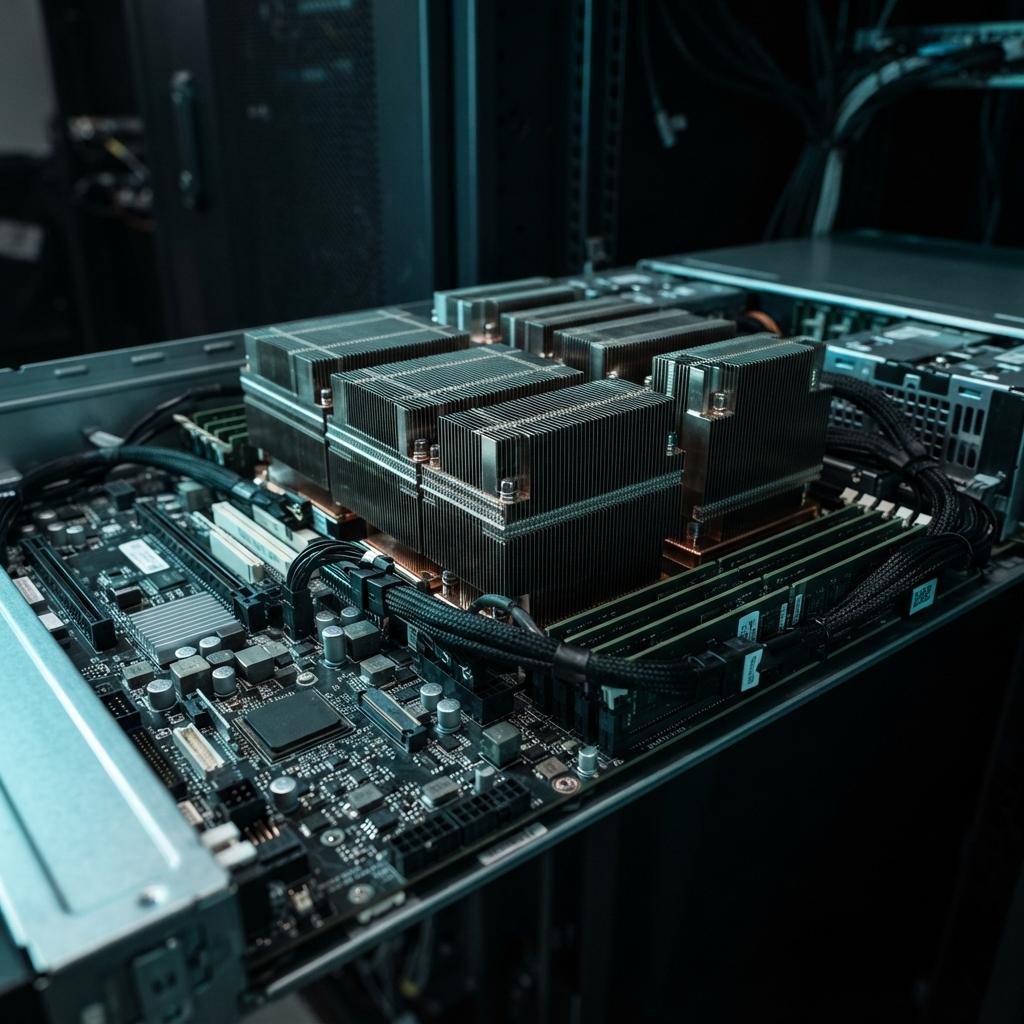
Quick answer: Production AI infrastructure in 2026 depends on three pillars: dense accelerated compute, low-latency orchestration, and a hybrid cloud-to-edge topology. The biggest failure mode is not model quality, it is the gap between a working prototype and a system that holds up under real traffic and cost constraints.
Introduction
Production-grade AI infrastructure in 2026 rests on three non-negotiable pillars: dense accelerated compute, low-latency orchestration, and a deployment topology that spans cloud and edge without fragmenting your stack. The single biggest failure mode this year is not model quality; it is the gap between a working prototype and a system that holds up under real traffic, cost ceilings, and reliability targets. Teams that treat GPUs as the whole solution keep hitting the same walls: memory bottlenecks, idle accelerator spend, and inference tails that break service-level agreements. The organizations pulling ahead are the ones treating infrastructure as a design discipline rather than a procurement line item. What separates them is a repeatable framework for evaluating compute, scaling, and performance tradeoffs before committing capital.
Key Takeaways:
Accelerated compute is necessary but insufficient; orchestration, memory bandwidth, and networking determine real throughput.
Hybrid cloud and edge topologies now outperform pure-cloud setups on both latency and long-run cost for steady workloads.
Cost control comes from utilization discipline and inference optimization, not from buying more hardware.
The Modern AI Hardware and Compute Foundation
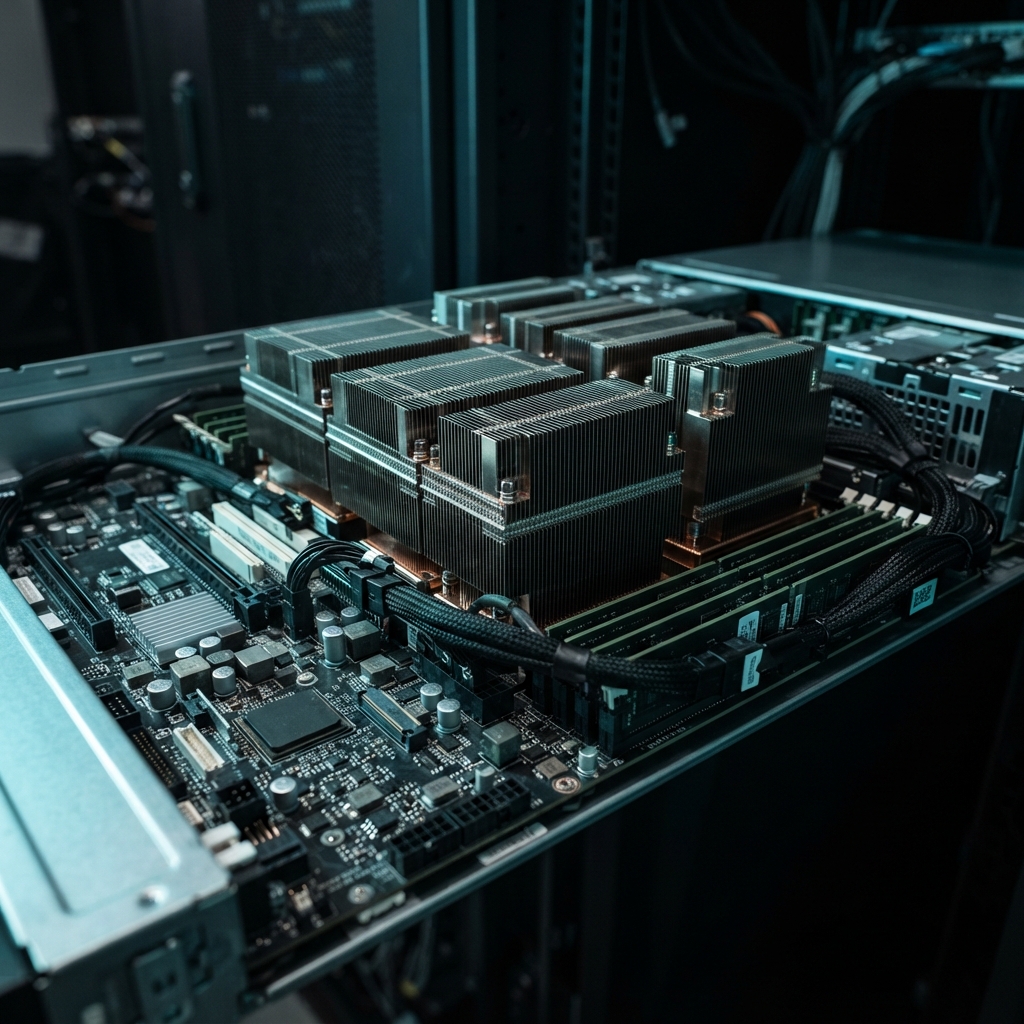
A production AI stack starts with hardware, but the decisive factor is how those components move data between each other. Raw accelerator counts mean little when memory bandwidth, interconnect speed, and orchestration overhead throttle actual utilization. The 2026 baseline for enterprise AI infrastructure assumes high-bandwidth memory, fast node-to-node fabric, and a scheduler that keeps expensive silicon busy rather than idle.
Core Components of a Production AI Stack
Effective AI hardware infrastructure is a system of interdependent layers, and weakness in any one caps the performance of the rest. When evaluating your AI infra stack, audit each of these against your workload profile rather than chasing headline specifications.
Accelerators: GPUs and TPUs remain the workhorses, but selection should match precision needs and memory footprint, not brand prestige.
Memory bandwidth: High-bandwidth memory often bottlenecks large models before raw compute does, especially during inference.
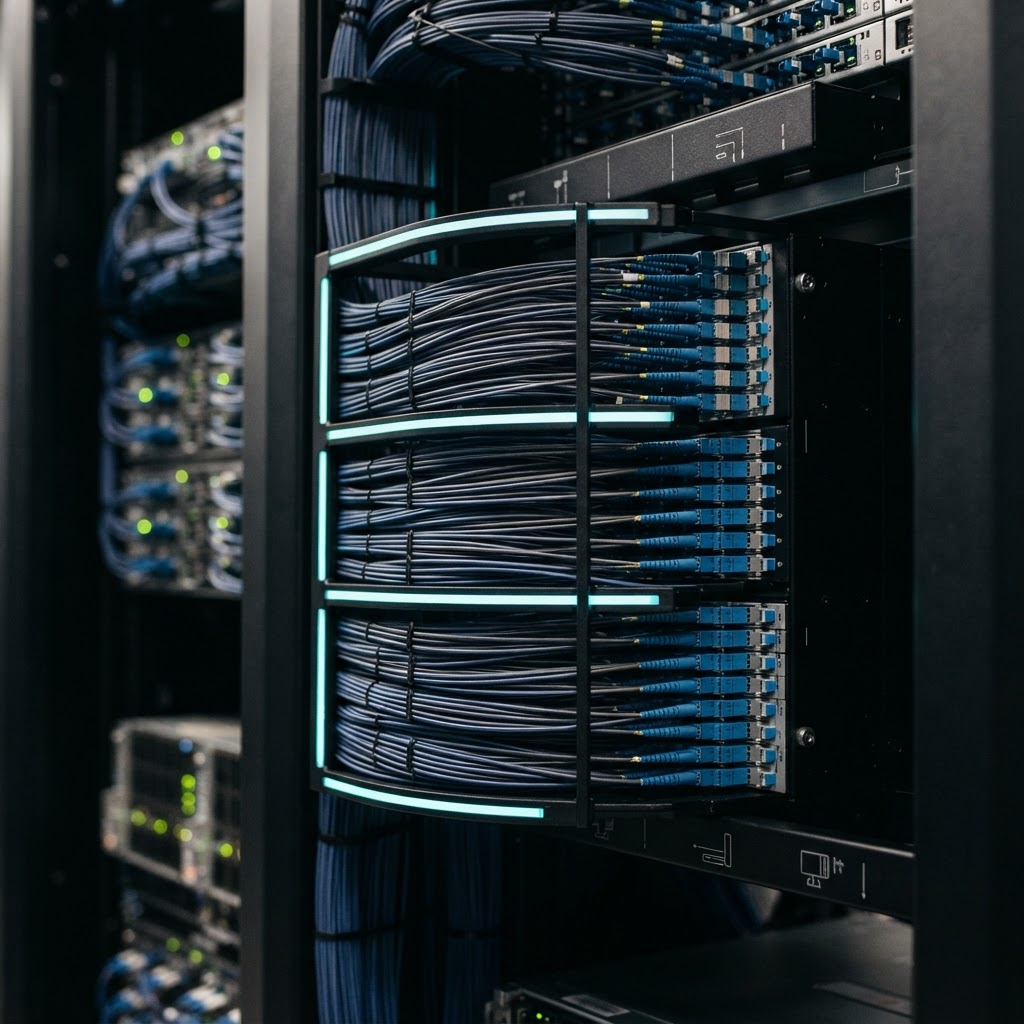
Interconnect fabric: Node-to-node networking dictates how well you scale distributed training and multi-GPU serving.
Orchestration layer: Kubernetes-based scheduling and GPU-aware queuing keep utilization high and prevent stranded capacity.
Storage throughput: Feeding accelerators requires parallel file systems that sustain data delivery without starving the pipeline.
GPU Orchestration and Accelerator Selection
GPU orchestration is where most compute budgets quietly leak, because idle accelerators cost the same as busy ones. Modern GPU orchestration options now include native PyTorch support on TPUs and vLLM-based serving that squeezes more throughput from each device. The choice between raw GPU access and managed accelerator pools comes down to how predictable your compute resources for generative AI actually are, since bursty workloads favor elastic pools while steady inference favors reserved capacity. Getting distributed inference architecture right early prevents a costly re-platform once traffic scales. This is also where pipeline orchestration tools earn their keep, coordinating training and serving without manual intervention.
Deployment Topology, Scalability, and Cost
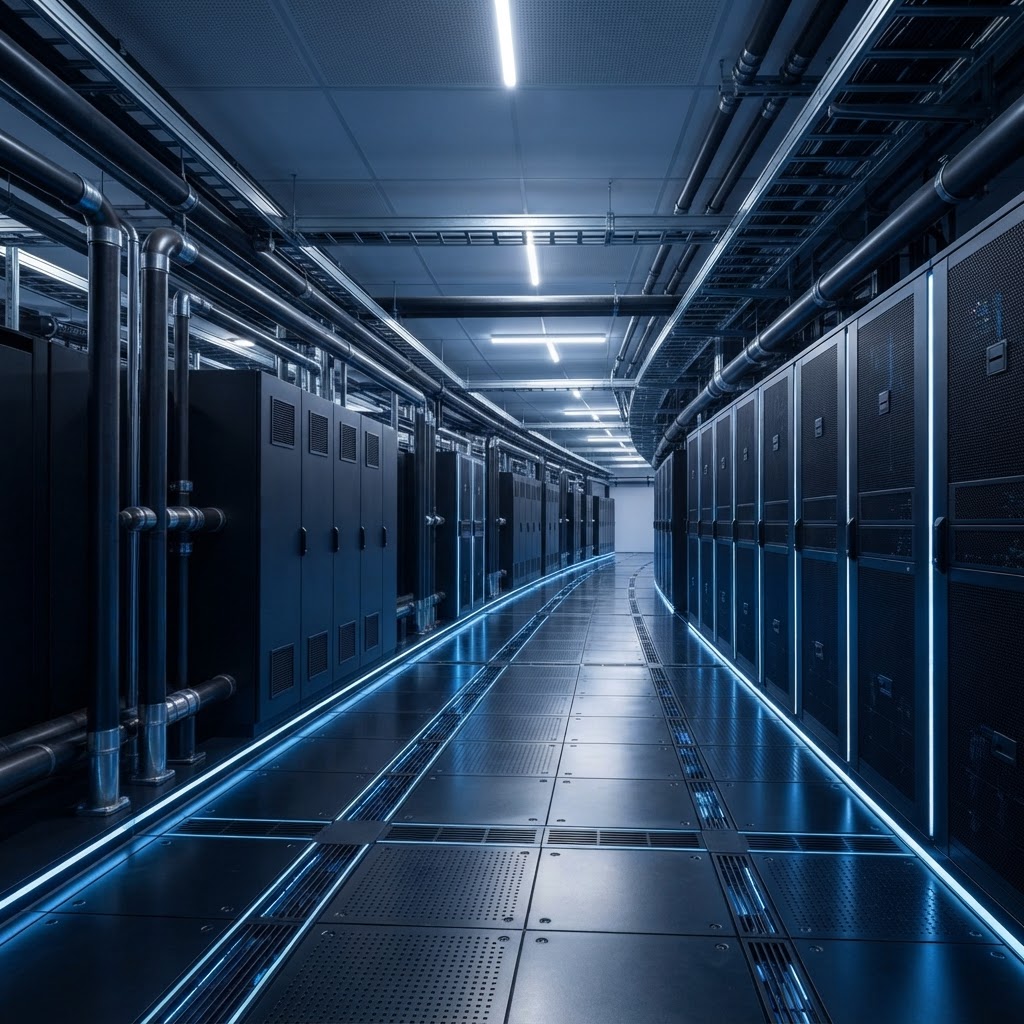
Where you run your models is now as consequential as what you run them on. The debate has shifted from a binary of on-premise versus cloud AI infrastructure to a layered question of which workloads belong in the cloud, which belong at the edge, and which justify owned hardware. This is the core decision that shapes both your scalability ceiling and your long-run cost curve.
On-Premise vs Cloud vs Hybrid Approaches
The right topology depends on workload steadiness, latency requirements, and data governance constraints rather than a universal best answer. Hybrid cloud AI infrastructure has become the default for organizations running scalable AI workloads because it lets you reserve baseline capacity while bursting to elastic compute during demand spikes. Edge deployment adds a third dimension, pushing inference closer to users for latency-sensitive applications, and cloud-to-edge deployment strategies increasingly rely on lightweight runtimes to make that practical.
The table below compares the three dominant approaches across the criteria that most affect production decisions.
Approach | Upfront Cost | Scalability | Latency Control | Best For |
|---|---|---|---|---|
On-Premise | High | Fixed ceiling | Excellent | Steady, regulated workloads |
Cloud | Low | Near-unlimited | Variable | Bursty, experimental workloads |
Hybrid | Medium | High | Strong | Mixed production and burst demand |
For most teams, the hybrid model wins because it isolates predictable baseline cost from variable burst cost, letting you optimize each independently. Pure cloud remains ideal while workloads are still unpredictable, and owned hardware pays off only once utilization is consistently high.
Managing Cost and Scaling Efficiently
Cost discipline in AI infrastructure comes from utilization and inference efficiency, not from throwing more accelerators at the problem. Automated scaling frameworks that handle real-time load balancing prevent both over-provisioning and SLA-breaking saturation, which is where the largest savings hide. Techniques like quantization, batching, and caching cut per-request cost, and detailed infrastructure cost optimization analysis consistently shows inference, not training, dominates the long-run bill. Pairing that with production scaling strategies keeps spend proportional to actual demand. Publications like NinjaStudio.ai regularly benchmark these tradeoffs so teams can weigh the total cost of ownership before committing.
Conclusion
Building production-grade machine learning infrastructure in 2026 is an exercise in balance, not maximalism. The strongest stacks match accelerator selection to workload profile, keep utilization high through disciplined orchestration, and choose a hybrid topology that separates steady cost from burst cost. Treat inference optimization as the primary cost lever, since it dominates long-run spend more than training ever will. Start by auditing your current bottlenecks against the framework here, then commit capital only where measured demand justifies it. Analysis from NinjaStudio.ai on inference latency optimization can help you pressure-test those decisions before they become expensive commitments.
Ready to move from experimental setups to reliable systems? Explore production AI guidance with NinjaStudio.ai to sharpen your infrastructure decisions with evidence instead of hype.
Frequently Asked Questions (FAQs)
What are the key components of AI infrastructure?
The key components are accelerators, high-bandwidth memory, interconnect fabric, an orchestration layer, and high-throughput storage, all working together so no single layer bottlenecks the rest.
Is a GPU enough for AI infrastructure?
No, a GPU alone is insufficient because memory bandwidth, networking, orchestration, and storage throughput determine real-world performance just as much as the accelerator itself.
How does AI infrastructure impact model training speed?
Infrastructure directly governs training speed through interconnect bandwidth and orchestration efficiency, since poor data delivery or scheduling can leave expensive accelerators idle for significant portions of a run.
Can I use standard cloud infrastructure for heavy AI?
Standard cloud works well for bursty or experimental workloads, but heavy sustained AI usage typically favors a hybrid setup that reserves baseline capacity to control long-run cost.
What are best practices for AI infrastructure management?
Best practices include maximizing accelerator utilization, automating scaling with load balancing, optimizing inference through quantization and batching, and choosing topology based on workload steadiness rather than defaults.
How do you build scalable infrastructure for AI?
You build scalable infrastructure by combining elastic compute pools, GPU-aware orchestration, and a hybrid cloud topology that lets capacity expand with demand without re-platforming.