
Introduction
The number of AI agent frameworks available to engineering teams has exploded over the past two years, and the gap between what works in a demo and what survives production traffic is wider than most vendor marketing suggests. Choosing the wrong framework at the architecture stage means months of refactoring, unexpected latency under load, and debugging opaque failure modes that only surface when real users hit the system. For teams building autonomous AI agents that need to operate reliably in enterprise environments, the framework decision is foundational. This comparison evaluates the leading options against the criteria that actually matter when deploying AI agent systems at scale: reliability, extensibility, tooling integration, observability, and community momentum.

What Production-Grade Actually Means for Agent Frameworks
Most framework comparisons evaluate features in isolation, listing tool-calling support, model compatibility, and memory modules as checkboxes. That approach misses the point. Production viability is determined by how a framework behaves when things go wrong: when an LLM returns malformed JSON, when a tool call times out, when latency spikes during peak traffic. The best AI agent frameworks are the ones that give engineers explicit control over decision-making in production without requiring them to rewrite core orchestration logic.
Key Evaluation Criteria
Before comparing specific frameworks, it helps to define the axes that separate production-ready tools from prototyping toys. Every engineering team will weigh these differently depending on their constraints, but these are the non-negotiables that surface repeatedly in post-deployment retrospectives.
Error Recovery: How the framework handles LLM failures, tool timeouts, and malformed outputs without requiring full re-execution of an agent loop
Observability: Native or pluggable support for tracing individual agent steps, logging token usage, and surfacing latency breakdowns per tool call
Scalability Primitives: Whether the framework supports concurrent agent execution, stateful checkpointing, and horizontal scaling without custom infrastructure
Tooling Extensibility: How easily custom tools, APIs, and data sources integrate without vendor lock-in or proprietary abstractions
Community and Maintenance: Release cadence, contributor diversity, and whether production users (not just hobbyists) are actively filing issues and contributing fixes
Why Demo Performance Misleads
A framework that looks clean in a Jupyter notebook often falls apart when you need deterministic behaviour across thousands of concurrent sessions. The most common failure pattern is frameworks that rely on implicit state management, where agent memory and context live in Python objects that cannot survive process restarts or horizontal scaling. Teams in the United States and globally have learned this lesson the hard way: the cost of migrating away from a framework that cannot checkpoint state is measured in engineering quarters, not sprints. Evaluating autonomous agent architecture before committing to a framework saves enormous downstream pain.
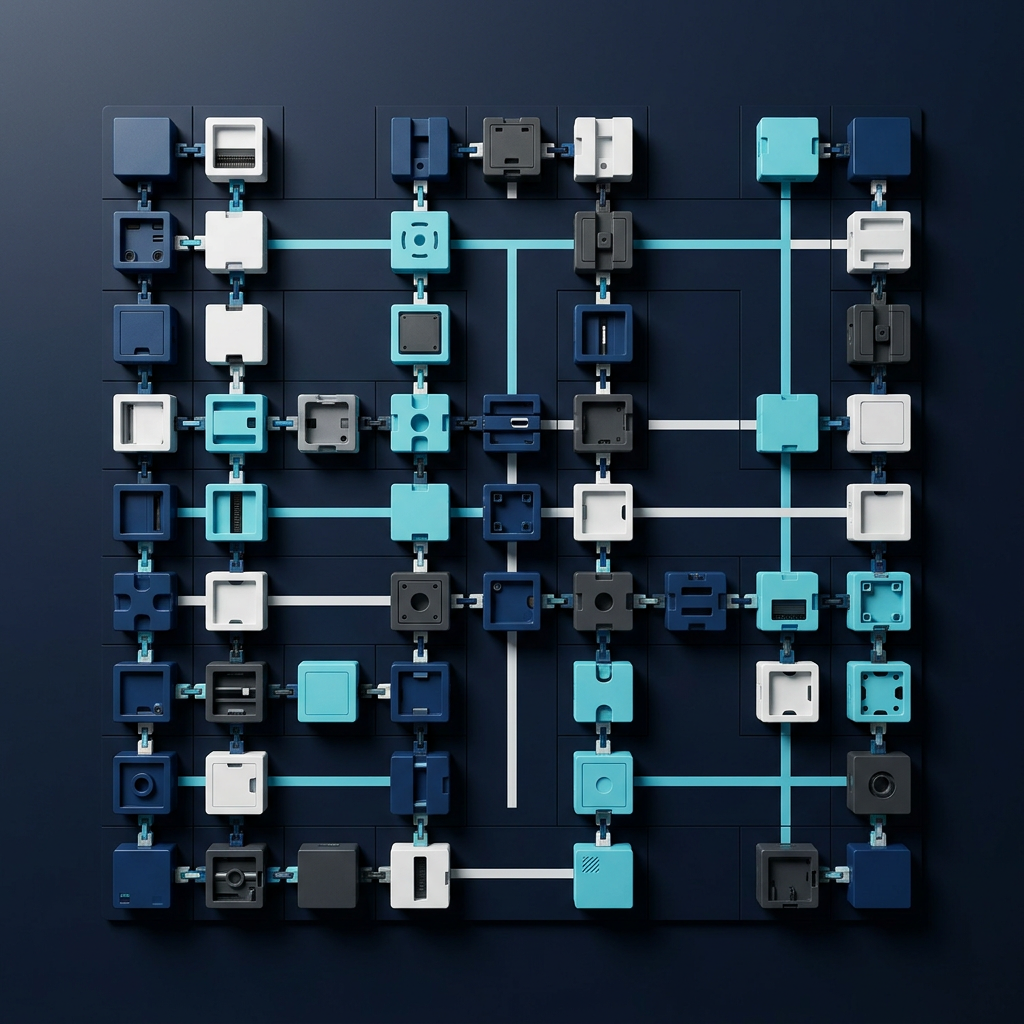
Framework-by-Framework Comparison
The frameworks below represent the most actively deployed options for building agent systems in production environments as of mid-2026. Each has distinct strengths and trade-offs that align with different team sizes, use cases, and operational maturity levels. Understanding agentic design patterns is a useful prerequisite for evaluating how each framework implements core orchestration logic.
LangGraph, CrewAI, AutoGen, and OpenAI Agents SDK
LangGraph, built on top of the LangChain ecosystem, is the strongest option for teams that need fine-grained control over agent execution flow. Its graph-based architecture lets engineers define explicit state transitions, conditional branching, and human-in-the-loop checkpoints. This makes it particularly well-suited for multi-agent orchestration patterns where different agents hand off tasks based on intermediate results. The trade-off is complexity: LangGraph has a steep learning curve, and debugging graph execution requires familiarity with its state management abstractions.
CrewAI takes a different approach by organizing agents into role-based "crews" that collaborate on tasks through a structured delegation model. It is the fastest path from zero to a working multi-agent prototype, which makes it popular for teams exploring AI agent use cases before committing to deeper implementation. However, CrewAI's abstractions become limiting in production. Its opinionated role assignment system makes it difficult to implement custom routing logic, and its observability story is thinner than LangGraph's. For teams that need to move fast on proof-of-concept work, CrewAI delivers. For teams that need to scale in production, the constraints become friction.
Microsoft's AutoGen framework excels at structured multi-agent conversations where agents negotiate, critique, and refine outputs collaboratively. Its design pattern documentation is among the most comprehensive available, and its integration with Azure services makes it a natural fit for enterprise teams already in the Microsoft ecosystem. AutoGen's weakness is portability: teams that want to run agents across multiple cloud providers or on-premise infrastructure will find themselves fighting Azure-specific assumptions baked into the framework's defaults.
The OpenAI Agents SDK, released as a lightweight alternative to the heavier frameworks, prioritizes simplicity and tight integration with OpenAI models. It offers built-in tool-calling, handoff patterns, and guardrails with minimal boilerplate. For teams whose AI agent implementation relies primarily on OpenAI models, it removes significant orchestration overhead. The limitation is obvious: vendor lock-in. If your production requirements include model flexibility or the ability to swap between providers based on cost and performance, the Agents SDK becomes a constraint rather than an accelerator.
How Multi-Agent Systems Change the Calculus
Single-agent architectures are increasingly giving way to multi-agent systems where specialized agents collaborate on complex workflows. This shift changes which framework features matter most. Latency compounds across agent handoffs, so frameworks with efficient inter-agent communication (like LangGraph's shared state graph) outperform those that rely on serial message passing. Teams building centralized vs decentralized orchestration architectures need to evaluate whether the framework supports both patterns or forces a single topology.
Amazon's engineering teams have published detailed findings on evaluating agentic systems in real-world deployments, and a recurring theme is that multi-agent coordination failures are the primary source of production incidents, not individual agent reasoning errors. The framework you choose determines how much visibility you have into those coordination failures and how quickly you can remediate them.
Conclusion
No single framework wins across every production scenario. LangGraph offers the deepest control for complex AI agent deployment pipelines. CrewAI accelerates prototyping but struggles at scale. AutoGen fits enterprise Microsoft shops. The OpenAI Agents SDK removes friction for teams committed to a single model provider. The right choice depends on your team's operational maturity, model flexibility requirements, and tolerance for abstraction complexity. Invest time in evaluating agent design patterns against your specific constraints before locking in a framework. NinjaStudio.ai publishes ongoing technical deep dives and benchmarks that can help teams stay current as these frameworks evolve rapidly.
Explore NinjaStudio.ai's full library of agent research to make your next architecture decision with confidence.
Frequently Asked Questions (FAQs)
What are AI agent frameworks?
AI agent frameworks are software libraries and toolkits that provide the orchestration layer, tool-calling interfaces, memory management, and execution primitives needed to build, test, and deploy autonomous agents powered by large language models.
How do multi-agent systems work?
Multi-agent systems work by assigning specialized roles to individual agents that communicate, delegate tasks, and share state through an orchestration layer, enabling complex workflows that no single agent could handle reliably on its own.
What makes a good AI agent framework for engineers?
A good framework for engineers provides explicit control over execution flow, robust error recovery, native observability hooks, and the flexibility to integrate custom tools without being locked into a single model provider or cloud platform.
Can AI agents replace developers?
Current agents can automate specific development subtasks like code generation, testing, and documentation, but they lack the contextual judgment, architectural reasoning, and stakeholder communication skills required to replace developers in production engineering roles.
Are AI agents reliable in production in the United States?
Reliability in production depends far more on the engineering practices around the agent (guardrails, fallback logic, observability, and human-in-the-loop checkpoints) than on geography, though compliance and data residency requirements in the United States add additional framework selection criteria for enterprise teams.