Quick Answer
For production LLM inference, platform fit depends on measured request patterns, model size, deployment access, and total token economics. NVIDIA's Groq 3 LPX is designed for the low-latency and large-context demands of agentic systems, while Cerebras describes its offering as predictable, high-performance inference. The right AI chip depends on measured request patterns, model size, deployment access, and total token economics rather than a headline benchmark alone.
Introduction
Groq, Cerebras, and Nvidia represent different approaches to AI accelerator design, so they should not be evaluated as interchangeable hardware. Nvidia’s platform supports a heterogeneous inference architecture, while LPUs use SRAM-heavy dataflow for responsive inference. For technology leaders, the purchase decision becomes a business decision when latency targets, concurrency, and operating cost determine whether an AI feature reaches production. A fast result on one prompt tells little about tail latency, queueing behavior, or integration effort.
Key Takeaways:
Architecture determines whether a platform prioritizes interactive latency or aggregate token production.
Benchmark results require workload, model, concurrency, and pricing context before procurement decisions.
Production evaluation should measure cost per useful token alongside operational integration requirements.
AI Chip Architecture: What Actually Changes in Production
An AI chip decision changes the path from a user request to generated tokens. GPUs handle broad parallel workloads and fit established training and serving stacks, while purpose-built inference designs reduce data movement and scheduling overhead for specific model-serving patterns. The important distinction is not whether a system is "AI hardware," but where memory sits, how chips communicate, and how predictable token delivery remains under load.
Three designs, three operational assumptions
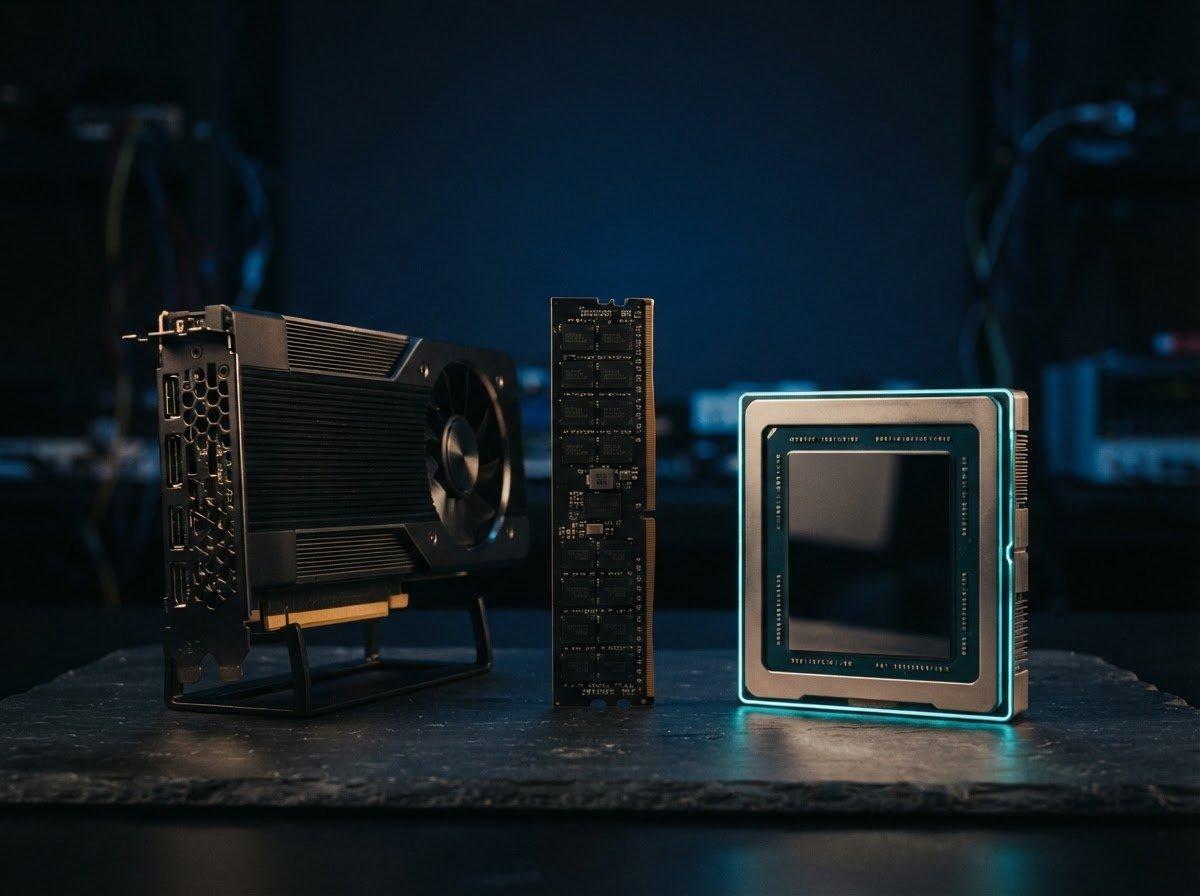
Nvidia GPUs, Groq-derived LPUs, and Cerebras systems optimize different constraints. A useful technical review separates the chip architecture from the surrounding compiler, runtime, networking, cloud access, and support model, because each layer can become the deployment bottleneck.
Nvidia GPU platform: Heterogeneous architecture that pairs general-purpose GPUs like Vera Rubin with inference-specialized accelerators in the same rack.
Groq-derived LPU: SRAM-heavy dataflow architecture designed for high-performance inference serving.
Cerebras system: Supports 16-bit precision natively in hardware for use cases that need it.
Memory locality: On-chip memory can reduce repeated external-memory access.
Memory and interconnect are the real scaling tests
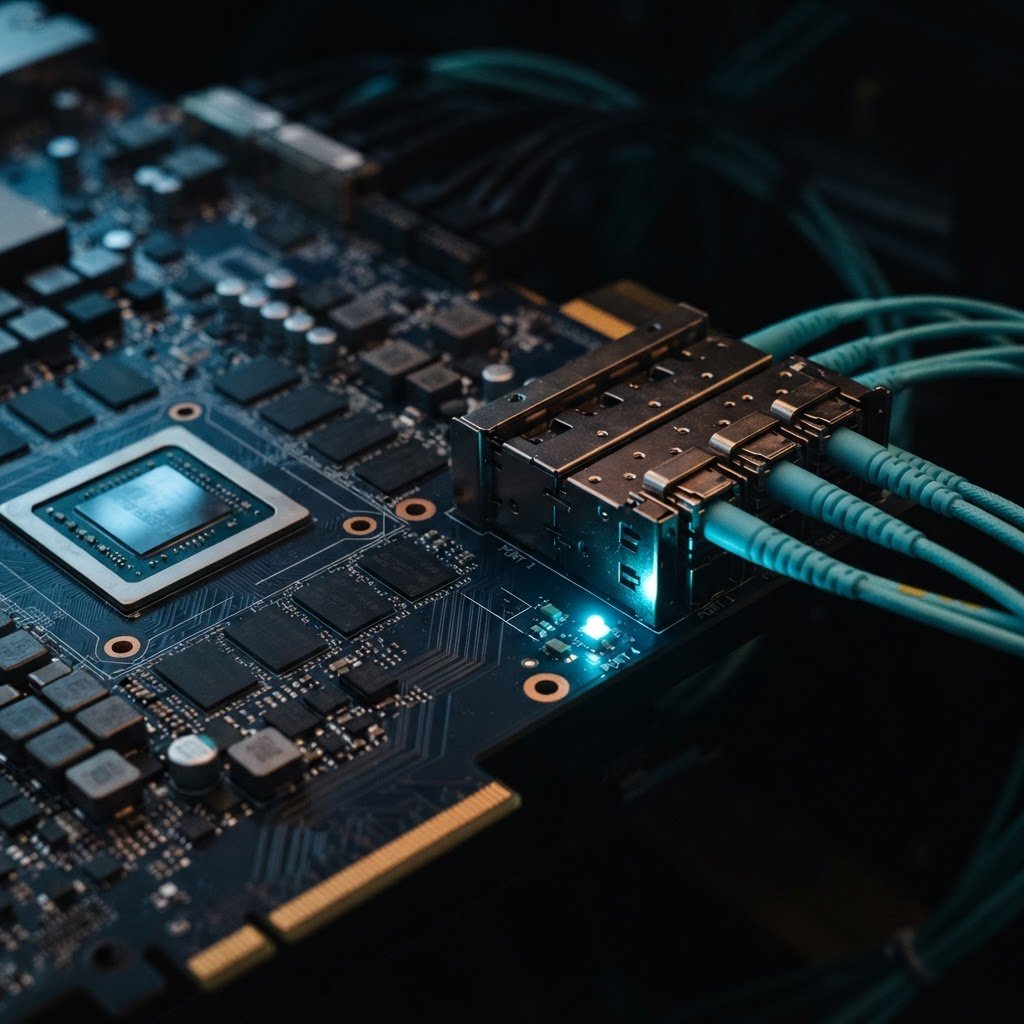
Large language models need more than compute units: they need a reliable path for weights, key-value cache data, and tokens to move across the serving system. NVIDIA's Groq 3 LPX lists 500 MB of compiler-managed SRAM and 96 chip-to-chip links at 112 Gbps per LPU, illustrating why low-latency inference depends on system design rather than a single-chip specification. Groq-derived LPUs feature compiler-managed SRAM and are designed for low-latency inference; SRAM has a larger area and higher cost per bit than DRAM. Teams planning clusters should understand AI cluster interconnects before treating raw accelerator counts as capacity.
NVIDIA vs Custom AI Silicon: Benchmark Claims Need Context
NVIDIA vs custom AI silicon is not a clean contest between old and new technology. GPUs can serve varied models and workloads through a mature ecosystem, whereas specialized silicon narrows the design target to make particular inference behavior more predictable. That tradeoff matters most when a team has stable models, known prompt shapes, and a measurable latency objective.
What the available benchmark data shows
Published comparisons can highlight real architectural differences, but they rarely settle a procurement decision by themselves. NVIDIA's Groq 3 LPX is designed for the low-latency and large-context demands of agentic systems. The Register's analysis reports that Nvidia said its platform was four times faster than the nearest alternative under the stated conditions.[1]
The table isolates facts that affect deployment design rather than converting a limited benchmark into a universal ranking.
Platform | Architecture detail | Published performance detail | Deployment implication |
|---|---|---|---|
Nvidia | Vera Rubin can pair with LPX in a heterogeneous inference architecture. | Its Groq 3 LPX has 500 MB SRAM and 96 links at 112 Gbps. | Supports aggregate token production and responsive interactive workloads. |
NVIDIA Groq 3 LPX | Rack-scale inference accelerator for the NVIDIA Vera Rubin platform. | Each LPU has 500 MB of compiler-managed SRAM and 96 chip-to-chip links at 112 Gbps. | Designed for low-latency and large-context demands of agentic systems. |
Cerebras | Wafer-scale system approach. | Cerebras states that its pricing can be similar to Groq's or up to 50% higher, assuming a 3:1 input-to-output token ratio. | Cloud access and enterprise support are available. |
The primary takeaway is that throughput, latency, and availability are separate metrics. A platform that generates tokens quickly in one controlled test may still create friction if it cannot match the team's model, region, tooling, security posture, or capacity plan.
Why benchmark leadership can disappear in a real service
Production benchmark metrics must include first-token latency, inter-token latency, concurrent sessions, context length, failures, retry behavior, and token cost. Teams that only compare tokens per second can miss queueing delays or quality changes caused by quantization, batching, and model-version differences. NinjaStudio.ai's analysis of production benchmark metrics is useful here because it shifts evaluation from leaderboard output to service-level behavior. For a broader view of reported accelerator positions, see why Nvidia's market-share figures can conflict.
Use published numbers as a hypothesis, then replay representative traces with the same model and decoding settings. That approach exposes whether low-latency AI inference hardware improves the customer experience or simply moves the bottleneck to retrieval, moderation, networking, or application orchestration.

How to Buy an AI Accelerator for Enterprise Deployment
The best AI chips for enterprise deployment are the ones that meet a defined service objective without creating an unmanageable integration burden. Start with the workload: training, batch generation, real-time assistants, coding agents, or high-context document analysis each stresses hardware differently. Then evaluate the complete operating model, including provider access, observability, model portability, capacity commitments, and incident response.
Build a decision scorecard around business constraints
Begin with traffic data rather than vendor architecture slides. Identify the model family, maximum context, expected concurrent requests, quality guardrails, and the user-visible delay that causes abandonment; then collect a representative prompt set with sensitive content removed. This helps compare the costs and benefits of specialized AI hardware, rather than focusing only on the largest isolated number. For teams comparing training options as well as inference, review TPU versus GPU requirements separately because framework and distributed-training needs can change the evaluation.
Next, test at realistic concurrency and calculate cost per completed, accepted output token. Capture platform time, application time, retries, retrieval calls, and the cost of keeping capacity ready for peaks. The risks behind dramatic scores are covered in AI benchmark limitations, especially when vendors use different models, output lengths, or serving conditions.
Procurement, supply, and ecosystem risk
Availability can outweigh architecture when a project needs predictable capacity and support. Nvidia describes deployments of nearly 1000 NVL72 racks weekly by hyperscalers in 2026. These are not equivalent claims, but they show why buyers should examine access paths and support commitments alongside silicon performance.
Domestic supply-chain investment also affects long-range planning: the Department of Commerce announced federal incentives worth $874 million supporting compute supply-chain research and development, including advanced packaging, memory, materials, and compute architectures.[2] That backdrop makes semiconductor innovation in the United States relevant, but it does not guarantee near-term capacity for any particular accelerator.

Conclusion
NVIDIA's Groq 3 LPX is a rack-scale inference accelerator designed for the low-latency and large-context demands of agentic systems. Consider specialized designs only after a workload test demonstrates that their latency or token-delivery characteristics improve a measurable service outcome. The durable decision is the one supported by representative traces, operating costs, and a credible path to scale, the same discipline that applies when weighing inference cost tradeoffs across providers more broadly.
Frequently Asked Questions (FAQs)
What is an AI chip and how does it work?
An AI chip is a processor designed to execute machine-learning operations efficiently, using parallel compute, specialized memory paths, or dataflow scheduling to move model weights and activations through inference or training workloads with less general-purpose overhead.
How to choose the right chip for AI model training?
Choose the right chip for AI model training by validating framework support, model compatibility, distributed-training requirements, memory capacity, storage throughput, and the engineering effort needed to reproduce results across development and production environments.
What is the difference between a GPU and an NPU?
The difference between a GPU and an NPU is that GPUs are broadly programmable parallel processors, while NPUs are more specialized engines intended to execute selected neural-network operations efficiently, often within a constrained device or system design.
Which AI chips are best for deploying large language models?
The AI chips best for deploying large language models depend on model size, context length, concurrency, latency expectations, software dependencies, and whether the deployment needs flexible multi-workload infrastructure or an inference-focused architecture.
Is specialized AI hardware worth the investment for startups?
Specialized AI hardware is worth the investment for startups only when measured production traffic shows that latency, utilization, or token economics improve enough to offset migration work, procurement constraints, operational complexity, and reduced portability.
How do benchmarks help in selecting AI processors?
Benchmarks help in selecting AI processors by providing comparable observations under stated conditions, but buyers should reproduce relevant tests because model versions, batching, context length, quality settings, and concurrency can materially alter production outcomes.
Sources
- What Nvidia's first Groq 3 LPU benchmarks tell us about its $20B gamble — theregister ↩
- Department of Commerce Announces Letters of Intent With 7 Companies for $874 Million to Accelerate Semiconductor R&D for the Compute Supply Chain — NIST ↩